

For Sam Herbert, figure skating didn’t begin with grand plans or Olympic dreams. It started quietly—early mornings at a small rink in Charleston, South Carolina, long before the Southern heat had time to set in. Those mornings, he says, are still some of the clearest memories he carries with him.
“I remember all the early mornings with my parents,” he recalls. “When I started training full-time, ice time was only available very early in the morning. My dad was the one who drove me to the rink, ensuring I never missed my 5:00 a.m. alarm.” After practice, his mom would scoop him up, and the two would stop for what became a cherished routine—“second breakfast” at their favorite coffee shop before school. “I’ll never forget those morning car rides.”
That sense of routine, support, and quiet commitment would become a throughline in Herbert’s skating career—one that continues to shape how he approaches the sport today.
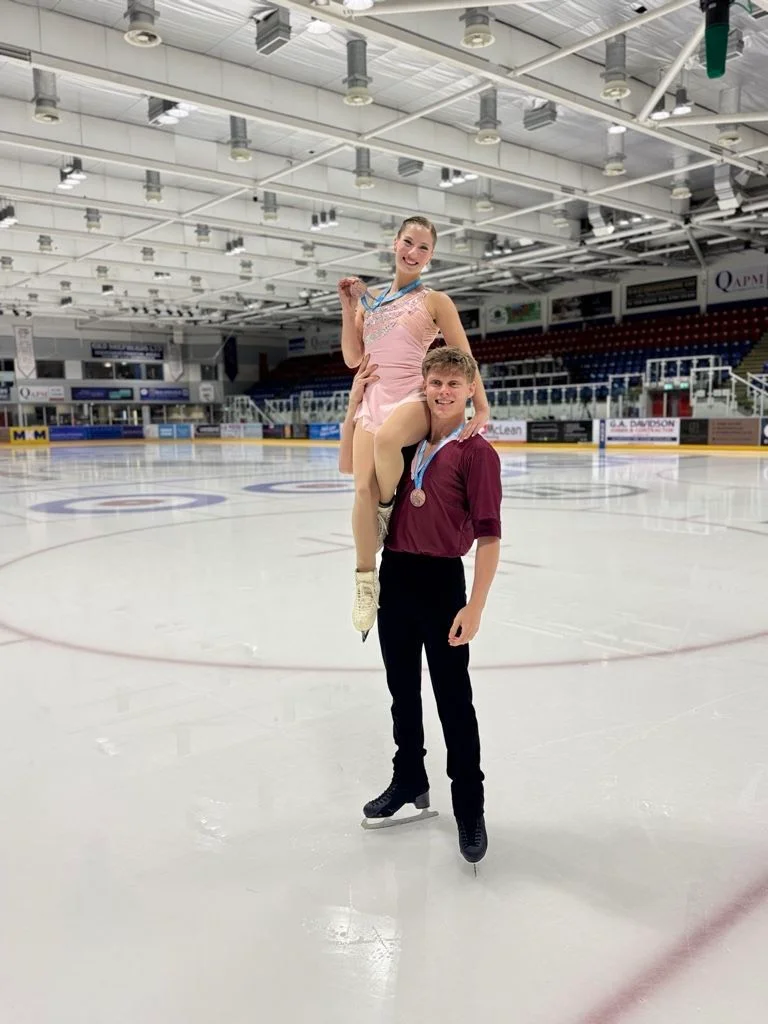
Table of Contents
From Escaping the Heat to Choosing the Ice
Skating wasn’t love at first glide. Growing up, Herbert dabbled in multiple sports, skating just once or twice a week while splitting time with others. “I wasn’t hooked on skating immediately,” he admits. “It was definitely an acquired passion.”
The turning point came around age 13, when his parents sat him down and asked a simple but life-altering question: which activities did he want to pursue seriously? Herbert remembers taking time to really think it through. “The more I thought about skating,” he says, “the more I liked what my future in the sport could look like.” Eventually, he made the leap—dropping everything else to skate full-time.
That decision required sacrifice, but it also brought clarity. Skating stopped being something he did and became something he committed to.
Lessons Learned Beyond the Rink
Before pairs skating entered the picture, Herbert’s athletic foundation was shaped by two unlikely teachers: fencing and lacrosse. Of the two, fencing left the deepest mark.
“Fencing taught me the most,” he says. Starting at around eight years old, he learned not only how to work hard, but how to fail—and how to sit with that failure. “I think it’s very important for kids to fail a few times growing up; it really shapes character and creates a growth mindset.”
Lacrosse contributed in a different way. “Most of those lessons came from conditioning,” he jokes. “I was not a fan of running up and down a football field in 85-degree weather.” Still, the grit and mental toughness carried over, preparing him for the physical and emotional demands of elite skating.
Discovering a Discipline Like No Other
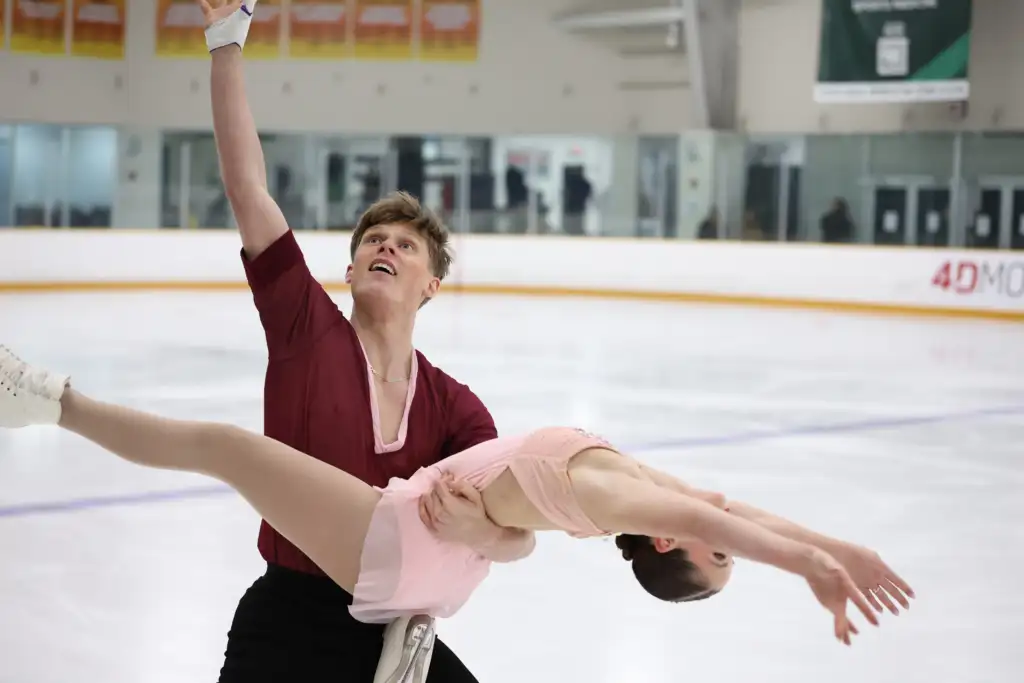
Pairs skating entered Herbert’s life almost unexpectedly. When his coach suggested exploring the discipline, he was immediately intrigued. “Pairs looked like nothing I’d ever seen before,” he says. “It looked fun, daring, and different.”
That sense of difference still resonates. “Even today, I believe there’s no discipline like pairs. We’re a unique type of skater.”
Committing to pairs changed more than his training—it changed his mindset. “Up until that point, I was only responsible for myself and my own success,” Herbert explains. “Now I was a part of another skater’s journey as well.” The excitement came hand in hand with responsibility, a balance he’s continued to learn how to manage.

Learning to Communicate Under Pressure
Unlike skaters who transition to pairs later in their careers, Herbert has spent most of his teens in the discipline. That experience, he says, has shaped how he views partnership and communication.
“The ability to work positively with a partner is something that has to be learned,” he says plainly. “Nobody is perfect, and communication skills take so much time to develop when you’re in a pressurized environment with another person.”
Pairs skating adds another layer to relationships already central to skating—coaches, parents, training teams. “Adding a partner to the mix can be tough,” Herbert acknowledges, “but having someone whom you can rely on and someone who can push you is invaluable.”
A Big Move and Bigger Growth
One of the most defining moments of Herbert’s career came when he relocated from South Carolina to Michigan to train with Jim Peterson and Amanda Evora. It was a major step—both personally and professionally—but one he doesn’t hesitate to call transformative.
“Moving to Michigan to work with my coaches was the best decision I could’ve possibly made,” he says. “Having such focused, intelligent instruction for so much time every day has completely changed me as a skater and as a person.”
The transition wasn’t without challenges. “The hardest initial challenge was the weather,” Herbert laughs. Growing up in a beach town hadn’t prepared him for Midwest winters. “My first winter in Michigan, I had to buy a winter jacket for the first time and learn how to drive in icy conditions.” Still, the adjustment was eased by a supportive training environment. “My new coaches and training mates did an amazing job of making me feel at home.”

Milestones, Momentum, and Firsts
This season marked a series of breakthroughs for Herbert and his partner, Alena, including qualifying for their first U.S. Figure Skating Championships at the Pairs Final.
“U.S. Nationals is always such a cool experience,” he says. “For us, there’s nothing to lose and everything to gain.” He sees Nationals not as a final destination, but as a checkpoint—“a proving ground for new teams” and a chance to show how far they’ve come.
International competition also played a key role in their growth. A third-place finish at the Tayside Trophy in Scotland offered valuable perspective. “Everything is a learning opportunity,” Herbert reflects. “Scotland helped me understand that good things take time. Patience is very important in skating, especially when building elements and skills with a new partner.”
Trust, Timing, and Teamwork
As a newer team, Herbert believes the biggest growth has happened mentally. “Figuring out how to physically work together is the easy part,” he says. “It’s the mental component that can take some time.” Over the course of the season, they’ve learned how each other thinks—and how to navigate pressure together.
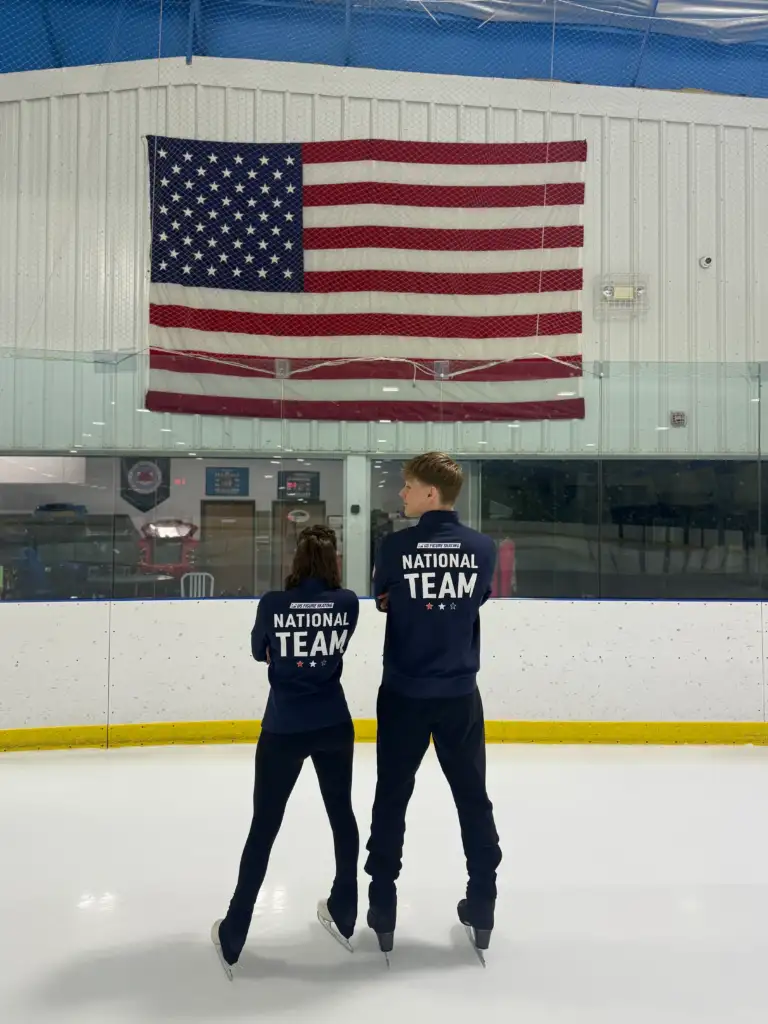
Heading into Nationals, the focus is on details and execution. “Thoughtful detail work and clean programs will set us up well,” he says, acknowledging the depth of talent in U.S. junior pairs.
Making Peace With Nerves
Competition nerves, Herbert admits, never really disappear. “I’m always nervous before I step on the ice,” he says. What’s changed is how he relates to that feeling. “Leaning into my nervousness keeps me sharp and reminds me how much I care about what I’m doing.”
The distinction, he’s learned, is between helpful and harmful nerves. “Learning how to turn one into the other was very important for me.”
That clarity has spilled into other areas of his life, too. “Small problems don’t require big solutions,” he says. “Keep it simple.”
Looking Ahead With Perspective
Long-term goals keep Herbert grounded when training gets tough. “My coaches inspire me a lot,” he says. “They’re tangible proof of success and the result of hard work.”
Still, he’s honest about his personal challenges—especially perfectionism. “Nothing will be perfect on the first try,” he reminds himself. “Nothing worth having comes easy.”
For younger skaters considering pairs, his advice is straightforward: build your foundation first. “Every strong pair skater has to also be a strong singles skater,” he says. “Spend a lot of time jumping, spinning, and working on edges.”
Off the ice, Herbert finds balance in the kitchen and through music. He’s passionate about nutrition, often cooking healthy meals to support recovery. Music—especially underground rap, house, Brazilian tech house, and cloud rap—offers another outlet, a way to decompress after long days at the rink.
As he prepares to step onto the ice at his first U.S. Championships, Herbert is focused less on outcomes and more on opportunity. “I’m just really excited for the experience,” he says, “and the chance to do what I love with a great partner and coaching team.”
