


Excerpt:
Many boy figure skaters struggle with confidence — they’re often one of the few boys at the rink, battling pressure to land big jumps while trying to fit into a sport that celebrates artistry and grace. In this candid, parent-to-parent feature, sport psychologist Katie Castle shares how parents and skaters can build confidence that lasts beyond medals. From managing self-doubt to embracing artistry, her practical tips reveal how boys can thrive under pressure, recover from mistakes, and find pride in expressing who they truly are on the ice.
Key Takeaways
- Unrealistic expectations and comparison are the top confidence killers for boys.
- Focusing on what’s controllable—effort, mindset, composure—reduces anxiety.
- “Zooming out” helps skaters value growth over perfection.
- Boys should be encouraged to own their artistry and see it as strength, not weakness.
- Short, simple focus scripts keep minds calm during competition.
- Parents play a huge role in modeling calm, realistic, supportive behavior.
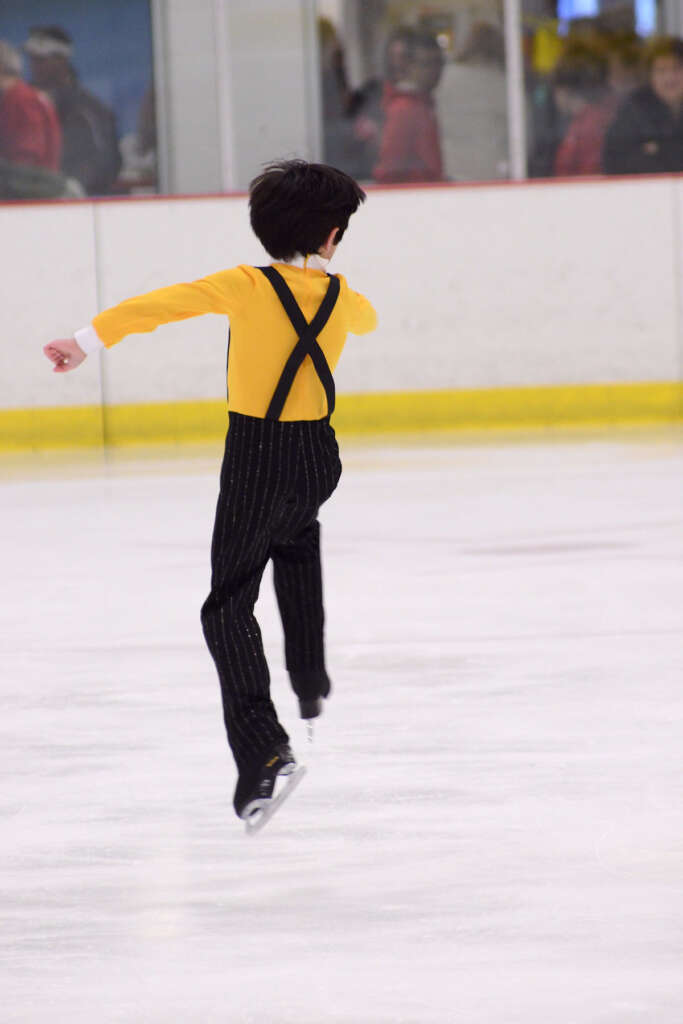
If you’ve ever sat in the stands watching your son skate, heart pounding harder than his program music, you know this truth: confidence can make or break a performance.
Maybe he nails his run-throughs in practice but freezes under the bright lights. Maybe he’s the only boy at the rink and feels caught between wanting to fit in and wanting to stand out. Or maybe he beats himself up after every popped jump, even when he’s made huge progress.
Sound familiar?
You’re not alone—and neither is he.
To help unpack the mental side of skating, I spoke with Katie Castle, a Registered Psychologist from Canada who specializes in youth sports. A former gymnast, coach, and sports mom, Katie has spent over 15 years helping young athletes build confidence and resilience both on and off the ice.
What she shared was equal parts practical and hopeful—a true blueprint for confidence designed specifically for boy skaters.
Table of Contents
1. Unrealistic Expectations: The Silent Confidence Killer
Let’s be honest: our kids can be really hard on themselves. Sometimes it’s because they’re ambitious. Other times, it’s because they think perfection is the only measure of success.
“The most common challenges I see are definitely unrealistic expectations, fear of failure, and comparison to others,” says Castle. “Often the boys expect themselves to be able to do things perfectly the first time and are extremely hard on themselves when they cannot. This is usually what leads to fear of failure, because they set an expectation for themselves that was nearly impossible to reach.”
It’s a vicious cycle—expectation leads to pressure, pressure leads to fear, and fear leads to frustration.
Katie reminds parents that this pattern is normal but manageable. Helping boys recognize progress, not perfection, can shift their mindset dramatically. Celebrate the process—the extra rotation attempted, the improved spin speed, the consistent edges. Those are victories, too.
2. Growing Up Different: When You’re the Only Boy at the Rink
Many boy skaters grow up in female-dominated environments. They’re surrounded by pink skate bags, sparkly dresses, and rink talk that doesn’t always include them. Some thrive in that setting. Others feel like outsiders.
“It can be challenging to be one of only a few boys,” says Castle. “In environments like this, boys may feel they have to be ‘chameleons,’ behaving one way at their female-dominant sport and then another way at school or in more male-dominated environments.”
But here’s the good news: being that “chameleon” isn’t a bad thing. “In many ways, this is really positive,” she adds. “It allows them to try out different ways of being until they find what fits best and feels true to themselves. It can also help them develop great social skill because they get experience in environments that include different genders and interests.”
So instead of worrying that your son is “different,” recognize the adaptability he’s building. Skating is giving him a broader world—a chance to connect, empathize, and communicate beyond the ice.
3. Why Great Practice Doesn’t Always Mean Great Competition
Every parent knows this one: he crushes every jump in practice, then struggles in competition. What changed?
According to Castle, the problem isn’t talent—it’s thinking too much.
“The main one we call ‘paralysis by analysis,’ which means that the athlete is really overthinking what needs to be done and this becomes overwhelming, so they freeze instead of taking action,” she explains.
“The other common reason is that athletes often focus on the possible negative outcomes of their performance and become anxious about mistakes. When the thinking and/or emotion centres of the brain are overutilized, there is less energy going to the parts of the brain athletes need to perform.”
In simpler terms: their brain is too busy worrying to let their body do what it already knows how to do.
Castle suggests that pre-competition routines can help—short breathing exercises, a single focus phrase, or even listening to music that calms nerves. The goal is to shift from thinking to doing.
4. Battling the Inner Critic
One bad jump. One fall. And suddenly, that little voice starts talking:
You always mess that up.
Everyone saw you fall.
You’re not good enough.
It’s painful to watch your child spiral after mistakes. But the good news is, that voice isn’t permanent—it can be retrained.
“I like to work with athletes to develop a short script that keeps their brains busy with things within their control and things happening in the moment,” says Castle. “This distracts them from ruminating on the mistake. Then they can come back to think about it later when they’ve calmed down and can think more logically about what went wrong.”
You can help, too. Encourage your skater to pick a short reset phrase—something like ‘Strong core, soft knees’ or ‘Focus forward’. That becomes their mental “anchor” when frustration hits.
5. When Love Turns into Pressure
Let’s be real for a second—parents mean well. We cheer, we encourage, we analyze, we want the best for them. But sometimes, our “support” can accidentally make things worse.
“If I could pick one piece of advice for parents that I would consider the most important,” says Castle, “it would be to help redirect conversations and focus to things within the athlete’s control. People always feel more worried about things they know they cannot change, and kids are no different.”
That means letting go of things like who are the competitors, ice quality, or judging. “It may be tempting to complain about something that seems unfair,” she adds, “but even if it’s true, it’s rarely helpful to point out to athletes.”
Instead, focus post-competition conversations on effort, composure, or attitude. “I loved how you kept fighting after that fall” does a lot more good than “You should’ve landed the double Axel.”
6. Progress, Not Perfection
Figure skating is built on precision—edges, positions, landings, timing. But when perfection becomes the only goal, confidence crumbles.
“Helping athletes ‘zoom out’ is really important,” Castle says. “Athletes have trained their brains to look for the micro mistakes they make in order to improve. Focusing on micro mistakes is like zooming in, and just like when you zoom into a picture on a phone, you can’t see the rest of the picture anymore.”
Parents can help kids “zoom out” by showing them progress over time. Watch old videos together. Track their first clean Axel to where they are now. Or look at the careers of their idols—every elite skater has faced slumps, injuries, and falls. Progress isn’t linear, and sometimes a little perspective can bring joy back to training.
7. Helping Boys Embrace Artistry
Let’s talk about artistry. For many boy skaters, the athletic part—jumps, spins, speed—feels natural. The artistic side? Not so much.
But artistry isn’t about “acting” or “being graceful.” It’s about connection—blending strong skating skills with musicality, emotion, and storytelling to create a performance that feels authentic and alive.
“Just like outside of sport, athletes sometimes shy away from things outside their comfort zone,” Castle explains. “But improvement and progress happen much quicker when athletes push themselves to do things that make them a little uncomfortable.”
Her advice to parents? Model it. “Give them examples of times you as the parent or coach left your comfort zone,” she says. “It helps them see that growth often means discomfort first.”
She also suggests giving boys ownership of their artistic growth. “Getting them to provide input when possible on ways to grow their artistry helps create more ‘buy-in’.”
Try asking your son what kind of story he wants to tell on the ice. Let him help pick the music or costume. When artistry feels like his choice, not an obligation, confidence follows.
8. Why Skating is Psychologically Unique
There’s a reason figure skating feels more mentally demanding than other sports. It’s not just about athleticism—it’s about judgment, artistry, and vulnerability.
“I think the two components that stand out for me are the subjectivity in judging, and the fact that the sport is not well understood by people outside the figure skating culture,” says Castle.
When outcomes feel out of their hands, anxiety spikes. “Nerves typically increase when we feel less control, and the fact that judging can be subjective rather than black or white can make skaters feel like their success rests in someone else’s hands.”
Add to that the lack of public understanding about the sport’s difficulty. “The amount of time, effort, and expertise required to reach a competitive level in figure skating is not well understood by many people,” she adds. “This can be frustrating for skaters who may feel their sport isn’t as valued as others.”
If your son feels this way, validate it—but remind him that greatness doesn’t always need recognition to be real. Confidence built on self-worth lasts far longer than medals.
9. One Mindset Skill Every Boy Should Have
Before a competition, it’s easy for thoughts to spiral. Did I warm up enough? What if I miss my combination?
That’s where Castle’s favorite confidence trick comes in.
“Come up with a short statement (like a script) to remind yourself of a few key words to focus on during the performance,” she advises. “Trying to focus on too much information can be overwhelming, but not planning ahead leaves room in your mind for negative thoughts to pop in.”
Some examples:
- Strong knees, breathe, flow.
- Sharp arms, centered spin, smile.
- I belong here.
It’s short, it’s grounding, and it helps keep their mind where it should be—on the ice, not in their head.
10. Building Confidence Together: The Parent–Athlete Partnership
At the end of the day, confidence isn’t something parents can hand their kids. It’s something we help them build, step by step, through the environment we create.
That’s exactly why Katie Castle’s new mental training course includes parents.
“There are a lot of common struggles athletes face on the mental side that can be avoided altogether if athletes receive training early on,” she explains. “Just like any skill, building mental resilience takes practice, and it’s better when youth are supported by the adults around them.”
Her biggest hope? “That boy skaters will feel better able to control their thoughts instead of the other way around—and their parents will feel more confident and better prepared to support their athletes through the stressors that come up in competitive skating.”
Final Thoughts: Raising Confident, Whole Skaters
Confidence in skating isn’t about arrogance or results. It’s about helping our sons learn that they are more than a score, a jump, or a medal.
It’s about teaching them that mistakes are data, not disasters. That artistry isn’t weakness—it’s courage. And that strength doesn’t come from being perfect, but from being persistent.
Katie Castle summed it up best:
“My professional focus is on youth athletes, trying to arm them with skills that prevent them from making their sport their whole identity so they can really enjoy what they do and be successful in both the short and long term.”
That’s a message every skater—and every parent—needs to hear.
About the Expert
Katie Castle, RPsych
Registered Psychologist | Canada
Former competitive gymnast, coach, and choreographer
Specializes in youth athletes and parent-inclusive mental performance programs
Check out her website: https://castlepsychology.ca/
“I enjoy including parents in the process and find that much more progress is made when athletes and parents learn together.”
