
In a recent episode of the Skate Ontario podcast Let’s Talk About It, hosted by “Skating PJ,” two-time Olympic silver medalist and world champion Brian Orser reflected on his extraordinary journey as both a skater and coach. The conversation provides valuable insights into Olympic preparation, mental resilience, and the enduring power of skating to unite people across cultures.
Table of Contents
Brian Orser’s Accomplishments
You May Also Like

Brian Orser’s skating résumé places him among the legends of the sport. A Canadian icon, he is a two-time Olympic silver medalist (1984, 1988), the 1987 World Champion, and the first man to land the triple Axel cleanly at the Olympics. Known for his strong edges, speed, and artistry, Orser was also one of the central figures in the famous “Battle of the Brians” at the 1988 Calgary Olympics.
His influence didn’t stop when his competitive career ended. As a coach at Toronto’s Cricket, Skating & Curling Club, Orser has guided some of the greatest champions of the modern era—including Yuna Kim, Yuzuru Hanyu, and Javier Fernández—to Olympic and world titles.
Early Fascination with the Olympics
Brian Orser’s Olympic journey started long before he ever stepped on Olympic ice. As he explained in the podcast:
“I always had this thing about the Olympics starting at a very young age. Any chance I could do a school project on the Olympics, I would.”
This early fascination fueled his determination. Even when he missed qualifying for the 1980 Lake Placid Games, he traveled with his father as a spectator. That experience gave him “the bug” and solidified his resolve to become an Olympian.
The “Battle of the Brians”
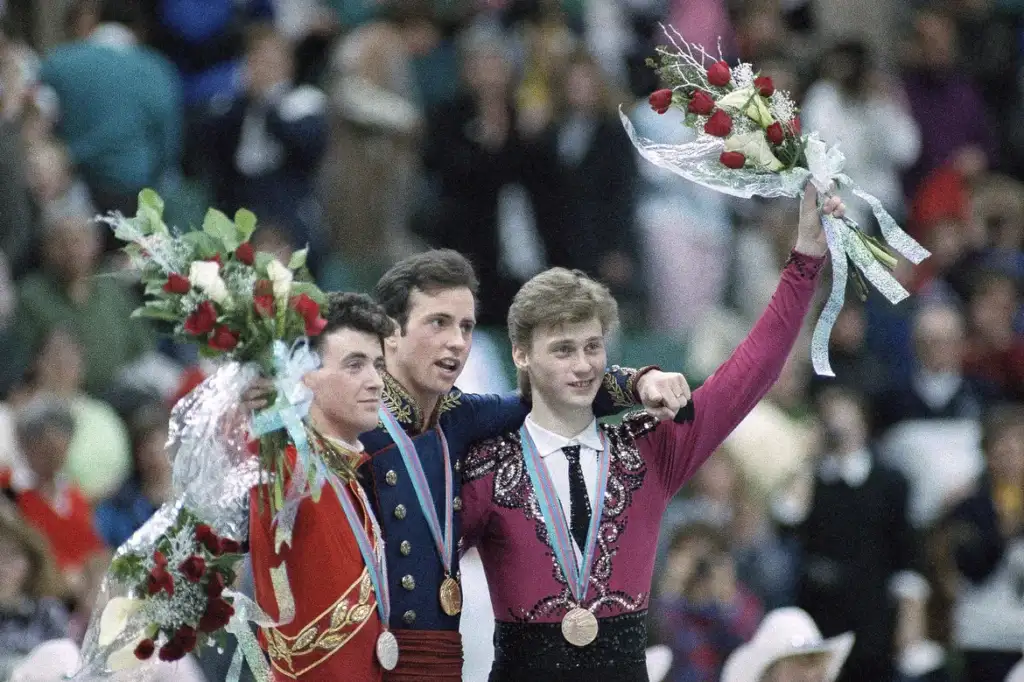
The 1988 Calgary Olympics will forever be remembered for the dramatic showdown between Brian Orser and American rival Brian Boitano, a clash that became known as the Battle of the Brians. Both men entered the Games as world champions—Orser in 1987, Boitano in 1986.
The final was a nail-biting contest of artistry and technical precision. Boitano delivered a flawless free skate, while Orser skated beautifully but made small errors that ultimately placed him second. The duel captivated audiences worldwide and elevated figure skating’s popularity in North America.
Reflecting years later, Orser noted the emotional difference between his medals:
“In 1984, I won the silver. In 1988, I lost the gold.”
Although that distinction was painful at the time, Orser has since come to view both medals as achievements he is “incredibly proud” of. He now appreciates the magnitude of standing on two Olympic podiums—a feat few skaters can claim.
Olympic Experiences: Opening Ceremonies and Carrying the Flag
One of Brian Orser’s most cherished memories is participating in the opening ceremonies at both the 1984 Sarajevo and 1988 Calgary Games. For him, simply walking into the stadium with the Canadian team was unforgettable.
In Calgary, the experience reached a new level when he had the honor of carrying the Canadian flag into the stadium in front of a home crowd. He described it as “incredible,” a moment that symbolized not only his personal journey but also the pride of representing his country on the world’s biggest stage.
The Olympic Games, he explained, were about more than medals—they were about focus, balance, and finding inspiration in athletes from other sports, all while protecting one’s own preparation.
Lessons in Preparation
One of the most striking lessons from Orser’s story is the relentless preparation required for Olympic success. He noted that his campaign for the 1988 Olympics began the very day after winning the 1987 World Championships.
“In 1988 it was different—it was bigger, more intense. The Olympics were in Canada, and I had to live and breathe the Games for the whole season.”
He emphasized the importance of being “somewhat selfish” during this time, focusing on what an athlete truly needs while blocking out distractions.
Mental Training and Visualization
Brian Orser also highlighted the role of visualization in his success. With limited practice ice at the Olympics, he used recordings of his programs as a form of mental rehearsal:
“I would watch my programs five or six times in my room, and that was as good as any kind of session.”
Instead of socializing in the Olympic Village, Orser often chose to stay in his room, mentally rehearsing until every movement felt ingrained. This strategy of turning visualization into a daily routine became one of the most important tools in his preparation—and later, one of the techniques he shared with his students.
Advice for Olympic Hopefuls
In the podcast, Brian Orser offered candid advice to the next generation of skaters aiming for Olympic glory. His main message: don’t be afraid to put yourself first.
“If you’re getting ready for the Olympics, this is the time you need to be pretty selfish. You have to think about what you need, and surround yourself with really good people that can help make it happen.”
He acknowledged that Olympic hopefuls will face constant reminders of the Games—on television, in commercials, even in everyday interactions like gas station cups with Olympic logos. That, he said, can feel overwhelming.
But Orser stressed that athletes should reframe these reminders as encouragement, not pressure:
“Everybody has great intentions for you—fans, family, your community, your province. Take comfort in that.”
For young skaters, this advice offers a roadmap: prioritize your training, block out noise, and remember that support—even when it feels like pressure—comes from a place of love.
Coaching Philosophy: Empathy, Strategy, and Shared Experience
Orser’s coaching philosophy is deeply shaped by his own journey as a skater. Known for being hard on himself, he brings empathy to his work with champions like Yuna Kim, Yuzuru Hanyu, and Javier Fernández.
“When the pressure was mounting, I could honestly say to my skaters: I know what you’re going through. That sense of understanding gave them relief, because not many people truly know.”
This ability to connect on a human level—grounded in the fact that he has stood in their shoes—makes Orser unique among coaches. He also emphasizes training smart, encouraging athletes to practice as though every run-through is the real thing. He points to Hanyu’s game-day intensity as an example of how mental rehearsal and physical preparation come together.
Moreover, Orser adapts his methods to different cultures, recognizing that training styles vary across countries. Whether coaching a Japanese, Spanish, or Canadian skater, he tailors his approach while maintaining the same central principle: athletes succeed when they feel understood, supported, and strategically prepared.

Skating Beyond Borders
Orser also celebrated skating’s ability to unite cultures. His rink walls are lined with flags from the many countries his students represent.
“We all speak the same language, which is skating. That’s what makes our world go around.”
This global perspective reinforces his belief that skating builds lifelong friendships, networks, and mutual respect.
Inspiration: A Legacy On and Off the Ice
Brian Orser’s story is one of perseverance, transformation, and legacy. From the boy who “just couldn’t skate” to an Olympian who carried Canada’s flag, and now to the coach of some of the greatest skaters in history, his journey shows the power of resilience and reinvention.
For athletes, Orser represents the idea that success is not defined by medals alone but by the courage to prepare, the discipline to focus, and the ability to carry lessons forward into new roles. For fans, his career is a reminder that skating is more than competition—it’s a lifelong community that unites people through passion and artistry.
Above all, Orser demonstrates that setbacks can become strengths, and that the wisdom gained from experience can inspire the next generation to chase their own Olympic dreams.
Key Lessons for Skaters
- Be Selfish When Necessary – Prioritize what you need in training and preparation.
- Visualize Success – Mental rehearsal is just as important as physical practice.
- Block Out Noise – Social media and outside opinions can be distractions; run your own race.
- Value Relationships – Friendships and networks formed through skating last a lifetime.
- Take Pride in the Journey – Whether you “win the silver” or “lose the gold,” your accomplishments matter.
- Find Comfort in Support – Pressure from fans and family often comes from love—use it as fuel.
